
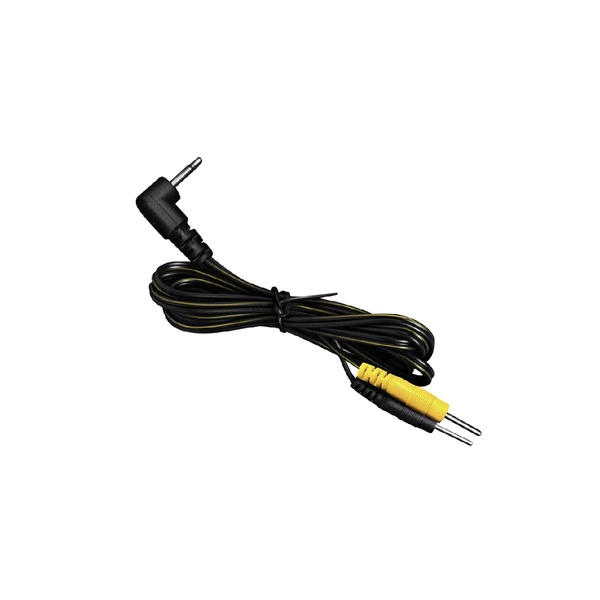
Standard Dual-Pin Electrode Cable Dungeon Lab
Dungeon Lab Standard Dual-Pin Cable – spare cable for e-stim systems
Dungeon Lab Standard Dual-Pin Cable is a sturdy lead designed for use with Dungeon Lab electrostimulation devices and accessories, as well as the DG-LAB Coyote 3.0. Made from a multi-core hybrid cable with high flexibility, it ensures reliable connectivity and resistance to frequent bending. Ideal as a backup or additional e-stim component, it provides smooth and stable performance during every session.
Main advantages
- Universal compatibility – dual-pin 2 mm connectors fit most e-stim devices available on the market.
- Durable construction – hybrid copper-and-fiber weave offers resistance to stretching, bending, and wear.
- Stable connection – guarantees consistent signal flow without voltage loss or interruptions.
- Flexible design – the cable remains supple, does not restrict movement, and retains its shape even with frequent use.
- Versatile application – suitable for connecting electrodes, rings, probes, or other e-stim accessories.
Application
The Standard Dual-Pin Cable is an essential component of every Dungeon Lab electrostimulation system. It connects the power unit with electrodes or accessories, ensuring a smooth signal flow and stable operation. Thanks to its flexibility and mechanical strength, it performs perfectly in both simple setups and complex multi-point configurations. It can be used as a main cable or as a backup – no adapters or modifications required.
Technical data
- Type: spare cable for e-stim devices
- Material: multi-core hybrid wire (copper + fiber)
- Durability: high resistance to bending and stretching
- Flexibility: soft, resilient, non-brittle
- Connector: dual-pin 2 mm
- Color: black
- Compatibility: DG-LAB Coyote 3.0, Dungeon Lab Powerbox, and other e-stim systems
Standard Dual-Pin Cable is an essential part of every Dungeon Lab setup. Durable, flexible, and precisely crafted – it ensures your equipment operates smoothly and without interference in every scenario.